Anti-lock Brakes
You’re driving through Arlesey when the traffic ahead brakes hard without warning. You press the pedal hard, but instead of a smooth stop, the wheels seize up, the tyres screech, and the car starts to skid. You’re no longer in control. And just before impact, one thought cuts through the moment: “I should’ve had that ABS light checked.” It had been lit for weeks — you just hadn’t got round to it.
The anti-lock braking system (ABS) is designed to stop situations like this in their tracks. It allows you to retain control of the steering, even while braking sharply. If it’s not working properly, you don’t just risk increased stopping distance; you risk losing the ability to steer out of danger.
At Cole & Miller Automotives in Arlesey, we help drivers from across Bedford, Hitchin, Letchworth and Stevenage with ABS issues of all kinds. It’s a highly complex system that depends on the flawless coordination of hydraulic components, mechanics and electrical signals. When something goes wrong, it needs attention from a specialist technician who understands how it all works.
In this blog, we’ll explain what anti-lock brakes do, how the system reacts in real time, and the signs that it’s time to book in with our team.
Let’s take a closer look at what your ABS really does.
What the Anti-Lock Braking System Is Designed to Do
The Anti-lock Braking System (ABS) prevents your wheels from locking when you brake suddenly, especially in emergencies. Its purpose isn’t to bring your car to a stop faster in every scenario, but to help you maintain control while slowing down.
If ABS isn’t active and you press hard on the brakes, one or more wheels can stop turning altogether. When that happens, the tyres lose traction. And once grip is gone, you lose the ability to steer or decelerate effectively. That becomes dangerous fast, particularly when trying to avoid a cyclist, vehicle, or roadside hazard. ABS helps avoid this by continuously adjusting brake pressure at each wheel in short, rapid bursts. This keeps the wheels rotating just enough to hold traction on the road.
It’s a key safety system that supports your ability to remain in control when it matters most.
How ABS Functions
Modern ABS systems are constantly monitoring in the background, waiting to respond at precisely the moment needed. During everyday driving, they may seem inactive, but the monitoring is constant. When a wheel starts to lock up under braking, the system reacts immediately.
Each wheel has a speed sensor that measures how fast it’s turning. That data is sent to the ABS control unit, which continuously compares all four wheels. If one slows too quickly — a sign it’s about to lock — the system activates. Valves in the ABS modulator reduce brake pressure at just that wheel. Once grip is restored, pressure is reapplied. This cycle happens multiple times per second, far quicker than a driver could ever react.
If ABS kicks in, you may feel the brake pedal vibrate beneath your foot. This is normal. It means the system is doing its job, keeping your tyres connected to the road and helping you avoid a skid.
But if just one part, a faulty ABS sensor, valve, modulator, or wiring issue, fails, that process can break down. The ABS light will come on, and your safety system could be compromised. If that happens, call Cole & Miller Automotives in Arlesey on 01462 730803 and we’ll get to the bottom of it.
Where You’ll Find the ABS System in Your Vehicle
The ABS system is made up of several interconnected parts, each designed to keep your wheels turning during hard braking. Here’s where those components are typically located and what they do:
- Wheel speed sensors – Positioned at each wheel hub, usually next to the brake discs. These sensors monitor how fast each wheel is rotating and send that information to the ABS control unit.
- ABS control unit (ECU) – Usually located in the engine bay. This electronic brain constantly analyses sensor data and makes decisions about when and where to adjust brake pressure.
- Hydraulic modulator or ABS pump – Also found under the bonnet, this unit manages the brake fluid pressure during ABS operation. Using solenoid valves and a pump, it can increase, hold, or release pressure in rapid bursts.
- Brake valves and hydraulic lines – Built into the modulator, these parts respond instantly during braking. By opening and closing in quick cycles, they direct fluid pressure to the right wheels at the right time to help avoid lock-up.
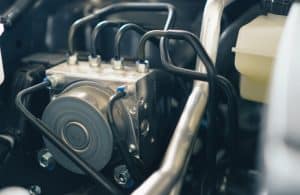
At Cole & Miller Automotives in Arlesey, our experienced specialists are trained to understand each of these components. If your ABS light is on or your braking feels unusual, call us on 01462 730803. For more insight into how your brakes work, check out our blogs on Brake Pads, Brake Discs, and The Braking System Explained.
The Stability Systems That Depend on ABS to Work
ABS isn’t a stand-alone system. On today’s vehicles, it forms the foundation for several advanced safety features that help stabilise your car during challenging conditions. Each of these systems relies on input from the ABS sensors to do its job properly.
Here’s a closer look at what they do:
- Electronic Brakeforce Distribution (EBD) – This system adjusts how braking power is shared between the front and rear wheels. It helps prevent the back end from sliding out during sudden stops or when the vehicle is heavily loaded.
- Traction Control (TCS) – If a wheel starts spinning on a slippery surface, TCS intervenes. It applies braking force to the affected wheel and reduces engine output until traction is regained.
- Electronic Stability Programme (ESP) – ESP kicks in if your vehicle starts to veer off course. By braking individual wheels, it helps correct oversteer or understeer, keeping the car headed in the direction you intended.
All three systems are built on the information that the ABS system provides. If there’s a fault with your ABS, these linked features may also be affected.
What Can Get in the Way of ABS Doing Its Job
Your anti-lock braking system is built to give you control during challenging braking situations. But it relies on accurate sensor feedback and responsive hardware. If anything interferes with that process, its effectiveness can drop quickly.
Unstable road conditions are one common cause. On ice, snow or loose gravel, ABS can struggle to maintain enough traction. While it may still support your steering input, it can’t overcome physics, so care is always needed in poor conditions.
Faults in the system itself are another issue. If just one ABS sensor sends unreliable data, or if the hydraulic modulator can’t keep up, the system may not intervene at all. That’s often when your ABS light appears on the dashboard.
At Cole & Miller Automotives in Arlesey, we treat every ABS warning light as urgent. Our technical evaluation gets to the root of the problem quickly, because even a momentary delay in braking performance can have serious consequences.
Signs That Suggest Your ABS Isn’t Working
When your ABS system fails, regular braking may still feel normal — until the moment you need that extra layer of protection and ABS doesn’t kick in. In an emergency stop, that missing support can be the difference of that crucial few feet.
Watch for these warning signs:
ABS warning light stays on
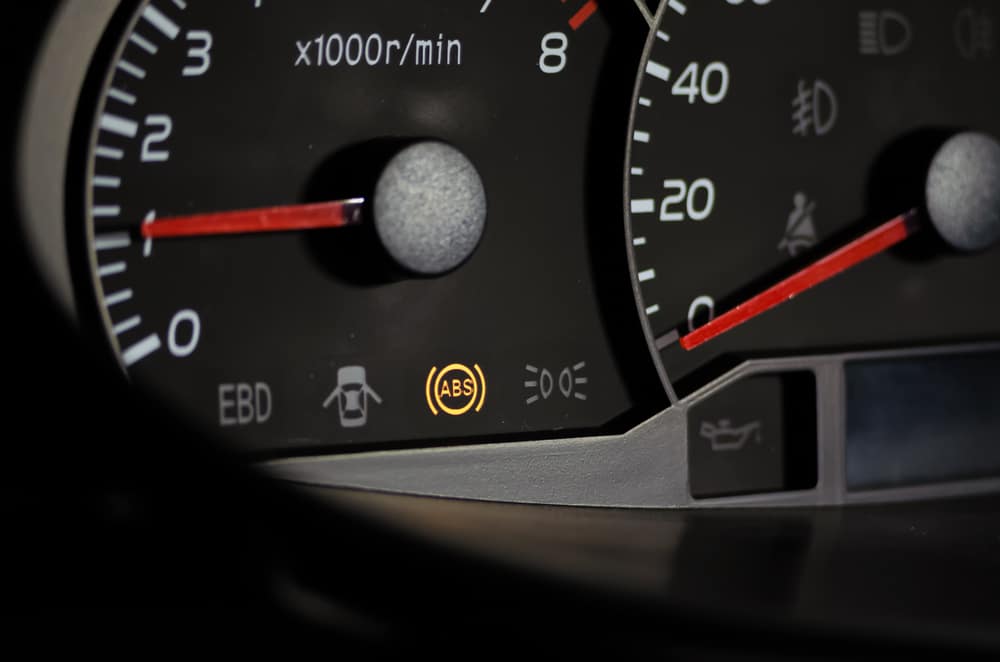
The light may briefly flash when you start the car; that’s normal. But if it remains on while driving, the system has detected a fault. ABS support may no longer be available, even if your regular brakes seem fine. That’s a critical safety issue. Call us on 01462 730803 and we’ll take a look.
No pulsing or feedback during emergency braking
If you slam the brakes and the wheels lock, or you don’t feel that distinctive vibration in the pedal, ABS might not be engaging. That pulsing feeling is a sign that the system is actively managing brake pressure.
Multiple dashboard lights
A faulty ABS sensor or control module can sometimes trigger other warning lights. You might see the brake warning light come on with the ABS light. Don’t ignore it — both indicate potential problems with braking control.
If you spot any of these symptoms, contact Cole & Miller Automotives in Arlesey on 01462 730803. We’ll run a full diagnostic evaluative process and make sure your system is operating safely.
Why ABS and Brake Warning Lights Deserve Urgent Attention
You may find it tempting to ignore a warning light when your car still feels like it’s driving normally. But with systems like ABS, that dashboard alert might be the only sign that a critical safety feature isn’t working.
If the ABS warning light is on, the system has identified a problem. Your regular brakes will still function — but without ABS, you won’t have pressure modulation, steering support during hard braking, or protection if a wheel locks. That may not seem obvious on a short drive through Bedford or Hitchin, but in an emergency situation, it could be the difference between stopping in time and a serious collision.
A range of issues can trigger the ABS light: from damaged sensors or wiring faults to internal errors in the control unit or hydraulic modulator. Once a fault is detected, the system may switch itself off as a safety measure, leaving you without ABS until it’s repaired and reset.
There’s also the MOT to consider. An illuminated ABS light is an instant MOT fail. If the brake warning light is also showing, that’s a second major defect, and a strong sign your car needs immediate attention.
At Cole & Miller Automotives, we’ve seen how fast small faults can turn into real risks. If your ABS or brake warning light is glowing, don’t ignore it. Call our Arlesey team on 01462 730803 and get booked in for a proper inspection.
Stay in Control: Let Cole & Miller Handle Your ABS Faults
Your car’s ABS is designed to protect you in the most critical moments, but it’ll only do that if it’s working as intended. When a fault develops, you could lose the ability to steer or stop safely when you need it most.
At Cole & Miller Automotives in Arlesey, we specialise in pinpointing and repairing ABS problems using the latest diagnostic equipment. Our team understands how today’s braking and stability systems work and what it takes to put them right.
Here’s what you can expect from us:
- Specialist technicians with extensive ABS system expertise
- Honest, clear advice tailored to your vehicle
- 12-month guarantee on all parts and labour
- Courtesy car available while your car’s with us
Call us today on 01462 730803 to book a brake system inspection or get expert help with your ABS warning light. We’re proud to keep drivers safe across Bedford, Hitchin, Letchworth, and Stevenage.