How Your Diesel Fuel System Works
Problems with your diesel fuel system should never be underestimated.
This system carries out one of your car’s most important tasks: delivering fuel to the engine. Without it, combustion wouldn’t happen, and your vehicle wouldn’t move.
Modern diesel fuel systems are highly sophisticated. They accurately supply the correct pressure and amount of fuel, giving today’s diesel vehicles their balance of power, economy, and dependability.
But here’s the problem.
Because the system runs at extremely high pressure and with incredible precision, even minor oversights, such as putting off a diesel fuel filter replacement or accidentally adding petrol, could result in expensive damage.
Throughout this article, you’ll uncover how your diesel fuel system works, the issues that arise when servicing is ignored, and why preventative maintenance could save you from expensive repair bills in the thousands.
Still have questions about your diesel vehicle? Book your service with Cole & Miller Automotives in Arlesey, serving Bedford, Hitchin, Letchworth, Stevenage and the surrounding areas: call 01462 730803.
How a Diesel Fuel System Operates
Diesel vehicles can be built with different types of fuel delivery, but most modern engines rely on a common rail diesel fuel system.
While manufacturers may design them slightly differently, the principle is the same across all types: a high-pressure rail feeds fuel to the injectors, ensuring a stable supply and precise injection timing.
The system is split into two stages:
- Low-pressure stage: The diesel fuel pump delivers fuel from the tank, moving through filters before it reaches the high-pressure fuel pump. This stage ensures the fuel is clean, at the correct pressure, and free from water or dirt before it enters critical parts.
- High-pressure stage: The high-pressure fuel pump then raises the pressure to the extreme levels required for combustion and directs it into the fuel rail, which keeps the diesel under constant pressure. From there, the diesel injectors atomise the fuel and spray it into the cylinders as a fine mist at precisely the right time.
In simple terms, the diesel fuel system ensures a dependable supply of clean, pressurised fuel reaches the cylinders whenever the engine runs.
Still have questions about your vehicle’s system? Our experts at Cole & Miller Automotives in Arlesey can help during your next service.
Inside the Diesel Fuel System: A Closer Look
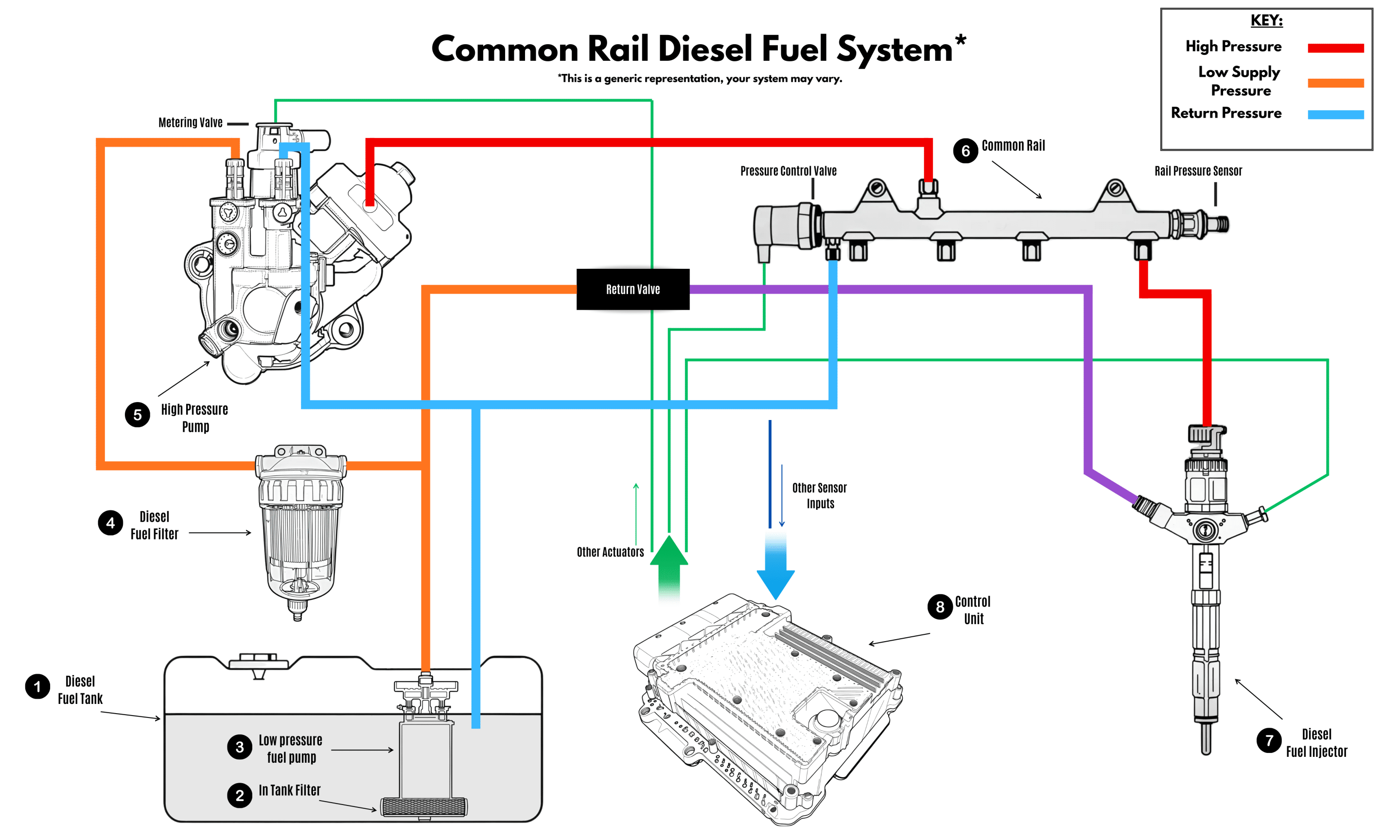
Now that we’ve looked at the overall process, let’s break down the common rail diesel fuel system into its main components. Each part has a vital role, and together they keep the engine running smoothly and efficiently (see the illustration below for a visual guide to how the parts connect).
The Low-Pressure Side of the Diesel Fuel System
Fuel Tank & Low-Pressure Fuel Pump
The process begins at the fuel tank (see part 1 of the image). From here, a low-pressure fuel pump (see part 3 of the image) delivers diesel towards the high-pressure pump, ensuring there’s a consistent supply to work with.
Diesel Fuel Filter
Before the fuel reaches the high-pressure components, it passes through one or more diesel fuel filters (see parts 2 and 4 of the image). These remove dirt and separate the water naturally present in diesel. Without this stage, contaminants could spread and cause serious damage throughout the system.
The High-Pressure Side of the Diesel Fuel System
High-Pressure Fuel Pump
After filtration, the diesel moves into the high-pressure fuel pump (see part 5 of the image). This component raises the pressure to around 1800 bar, preparing the fuel for efficient injection into the cylinders.
Metering and Pressure Control Valves
There are two valves managing this stage of the process:
- Fuel metering valve: The metering valve regulates how much fuel enters the high-pressure stage, ensuring the system delivers the optimal amount for engine demand.
- Pressure control valve: This valve keeps the rail at the correct pressure so the system can adapt smoothly to different driving conditions.
Together, these valves keep fuel delivery consistent and precise under all driving conditions.
Diesel Fuel Rail
Your diesel vehicle’s fuel rail (see part 6 of the image) acts as a high-pressure reservoir, holding diesel under constant pressure and distributing it evenly to each injector. Sensors monitor this balance to maintain performance.
Diesel Injectors
Finally, the fuel reaches the diesel injectors (see part 7 of the image). These highly precise components contain nozzle holes around the size of a human hair, allowing the fuel to atomise into an ultra-fine mist at exactly the right moment for combustion.
Why the Diesel Fuel System Stands Out
The diesel fuel system may look like nothing more than pumps, filters, and pipes, but it’s actually a finely engineered piece of technology. A few key features make it remarkable:
- Extreme pressure and precision: The system combines low-pressure supply with high-pressure injection to deliver fuel in fractions of a second. It has to cope with fuel blasted through at pressures thousands of times greater than tyre pressure, so it can be atomised into a fine spray for efficient combustion.
- Engineering accuracy: From the diesel fuel pump and filter to the high-pressure pump, rail, and injectors, each part is built to work with precision. Together, they ensure the optimal amount of fuel is injected at the right moment, supporting performance, efficiency, and reliability.
- Vulnerability to contamination: Because the diesel fuel system relies on such fine tolerances, even a small trace of dirt or water can cause corrosion or damage. To protect it, it is essential to replace your diesel fuel filter on time and use quality diesel.
When serviced regularly, the diesel fuel system allows your engine to run smoothly and reliably. But if neglected, minor problems can quickly escalate into pricey repairs.
For expert support, book your diesel service with Cole & Miller Automotives in Arlesey today: call 01462 730803.
What Happens If the Fuel System Is Neglected
Because the diesel fuel system operates at very high pressure and with exact precision, even small lapses in servicing can have serious consequences. Here are some of the most common outcomes:
- Missed diesel fuel filter changes: Filters trap dirt and separate water naturally found in diesel. If not replaced on time, those contaminants can circulate through the diesel fuel pump, rail, and injectors, causing corrosion and significant damage.
- Low-quality or contaminated fuel: Lower-quality diesel usually has a higher water content and more impurities, which increases the chance of corrosion in the high-pressure fuel pump, fuel rail, and injectors.
- System-wide impact: Once corrosion or debris enters the fuel system, it doesn’t stay localised. It spreads across the entire system, leading to repeated failures. Replacing just one part won’t solve the issue if the contamination remains.
In short, replacing a diesel fuel filter costs very little compared with the thousands it can take to repair a full system failure.
Another problem is misfuelling. Putting petrol into a diesel car is surprisingly common and highly damaging to your vehicle’s fuel system. Petrol lacks the lubrication that diesel provides, so even starting the vehicle briefly can push petrol through the fuel pump, rail, and injectors, causing extensive harm.
If misfuelling occurs, the safest step is to avoid starting the vehicle. Call a professional immediately to have the misfuelling rectified. Depending on the situation, this may involve draining the tank, flushing the system, and replacing the filter and other parts to prevent long-term damage.
Protecting Your Diesel Fuel System
Your diesel fuel system is robust and precise. With regular servicing, it works quietly in the background, keeping your engine efficient, reliable, and responsive. However, if neglected or misfuelled, issues can appear suddenly and lead to costly repairs.
The good news is that you can help protect your vehicle by following a few straightforward steps:
- Use quality diesel to limit water content and contamination.
- Stick to the manufacturer’s servicing schedule.
- Replace your diesel fuel filter at the recommended intervals.
Carrying out these simple steps is far cheaper than dealing with major repair work further down the line.
When it comes to protecting your vehicle, choosing the right garage can make all the difference. That’s why drivers in Arlesey, Bedford, Hitchin, Letchworth, Stevenage and the surrounding areas trust our experts at Cole & Miller Automotives.
Call us today on 01462 730803 to book your diesel service.
Why Drivers Around Arlesey Trust Cole & Miller Automotives
When it comes to keeping your diesel fuel system running at its best, the garage you choose really matters. Here’s why motorists in the local area rely on us:
- Quality service: Every repair and replacement is backed by a 12-month parts and labour guarantee, giving you complete peace of mind.
- Experienced team: Our technicians are highly skilled in modern diesel systems, including common rail diesel fuel pumps, filters, rails, and injectors.
- Convenient location: Based in Arlesey, we serve drivers from Bedford, Hitchin, Letchworth, Stevenage and the nearby areas.
- Courtesy car: We also offer courtesy cars to keep you on the road.
We’re proud of our reputation for trusted service. With an average Google rating of {{average-rating}}⭐ from {{review-count}} customers in the Arlesey area, you can feel confident booking your diesel service with us.
Keep your vehicle’s diesel fuel system in top condition; call Cole & Miller Automotives on 01462 730803 today.
Diesel Fuel System FAQs
1. How does a diesel fuel system work?
Most modern diesels use a common rail diesel fuel system. Fuel is first delivered at low pressure from the tank, passed through the diesel fuel filter, and then raised to very high pressure by the high-pressure fuel pump. It flows into the fuel rail before being injected into the cylinders at the correct time for combustion.
2. What is a common rail diesel fuel system?
This system operates in two stages. The fuel moves from the tank at low pressure, through the diesel fuel filter, and into the high-pressure fuel pump. The pump increases pressure and sends the fuel into the rail, which holds it under constant pressure. From there, diesel injectors deliver precise amounts to the cylinders when needed.
This approach allows stable delivery, efficient burning, and smoother performance.
3. Why is servicing the diesel fuel system important?
Servicing helps protect critical components such as the diesel fuel pump, filter, and injectors from wear, dirt, and water. Replacing filters on schedule reduces the chance of breakdowns, keeps the engine reliable, and avoids costly repairs.
4. What usually causes damage to the diesel fuel system?
Common causes include overdue filter changes, using low-quality fuel, water contamination, or misfuelling with petrol. Even tiny particles can circulate through the entire system, causing expensive damage to critical parts.
5. What happens if petrol goes into a diesel tank?
Petrol doesn’t lubricate like diesel does. If it enters your diesel fuel system, it can quickly damage the high-pressure fuel pump, rail, and injectors. Even starting the car for a split second may circulate petrol through these components and cause severe harm.
If misfuelling occurs, the safest step is not to start the car. Call a professional immediately. They will drain the tank, flush the system, and, depending on the damage, may need to replace the diesel fuel filter and other parts to prevent long-term issues.
6. How much does repairing a diesel fuel system cost?
Costs vary depending on the problem. A diesel fuel filter change is a low-cost preventative step, but repairs become far more expensive if the high-pressure fuel pump or injectors are damaged.
Still have questions about your diesel vehicle? Speak with the experts at Cole & Miller Automotives in Arlesey, covering Bedford, Hitchin, and Stevenage. Call us on 01462 730803 for advice or to book your service.