Diesel Fuel Filter
Can something as small as a fuel filter really decide whether your diesel runs smoothly or suffers costly breakdowns?
Your vehicle’s diesel fuel filter removes harmful particles and water from your fuel system. If left unchecked, it could lead to rough running or even serious repair costs, which is the last thing you want.
Throughout this blog, we’ll explain its position in your vehicle, its role, the different filter styles, and the consequences of neglect. Above all, we’ll show why staying on top of replacement intervals is a smart move for both performance and your wallet.
Book your service with Cole & Miller Automotives, Arlesey today, and our experts will ensure your diesel fuel filter is in top condition.
Call 01462 730803 to secure your booking.
Locating the diesel fuel filter
In modern diesel vehicles, the main diesel fuel filter is shown as part 4 in the diagram, fitted within the low-pressure circuit between the tank and the high-pressure pump. For most passenger cars, it can often be found in the engine bay to simplify routine servicing.
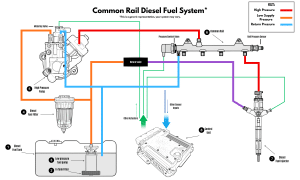
A lot of diesel fuel systems also include a coarse strainer inside the tank (part 2 in the diagram). Its role is to catch larger debris before it reaches the main filter, providing an extra layer of protection for the system.
The role of the diesel fuel filter
At its core, your vehicle’s diesel fuel filter is there to protect your engine’s fuel system from harm. It achieves this in the following key ways:
- Blocking contaminants: It intercepts particles and debris suspended in the fuel before they can cause wear or block injectors, saving you from expensive repairs.
- Removing water: Diesel often carries small traces of water, which the diesel fuel filter removes before they can reach critical parts. Left unchecked, this moisture can lead to corrosion and costly damage in the fuel system.
Your diesel fuel filter is the primary safeguard against the particles and water that can lead to costly fuel system damage. Regular replacement is a vital part of preventative maintenance — book your service with Cole & Miller Automotives, Arlesey today to keep your diesel performing at its best.
Types of diesel fuel filters and how they’re designed
Most modern diesel vehicles are fitted with a main fine filter module (shown as part 4 in the diagram), though the way it’s built can vary.
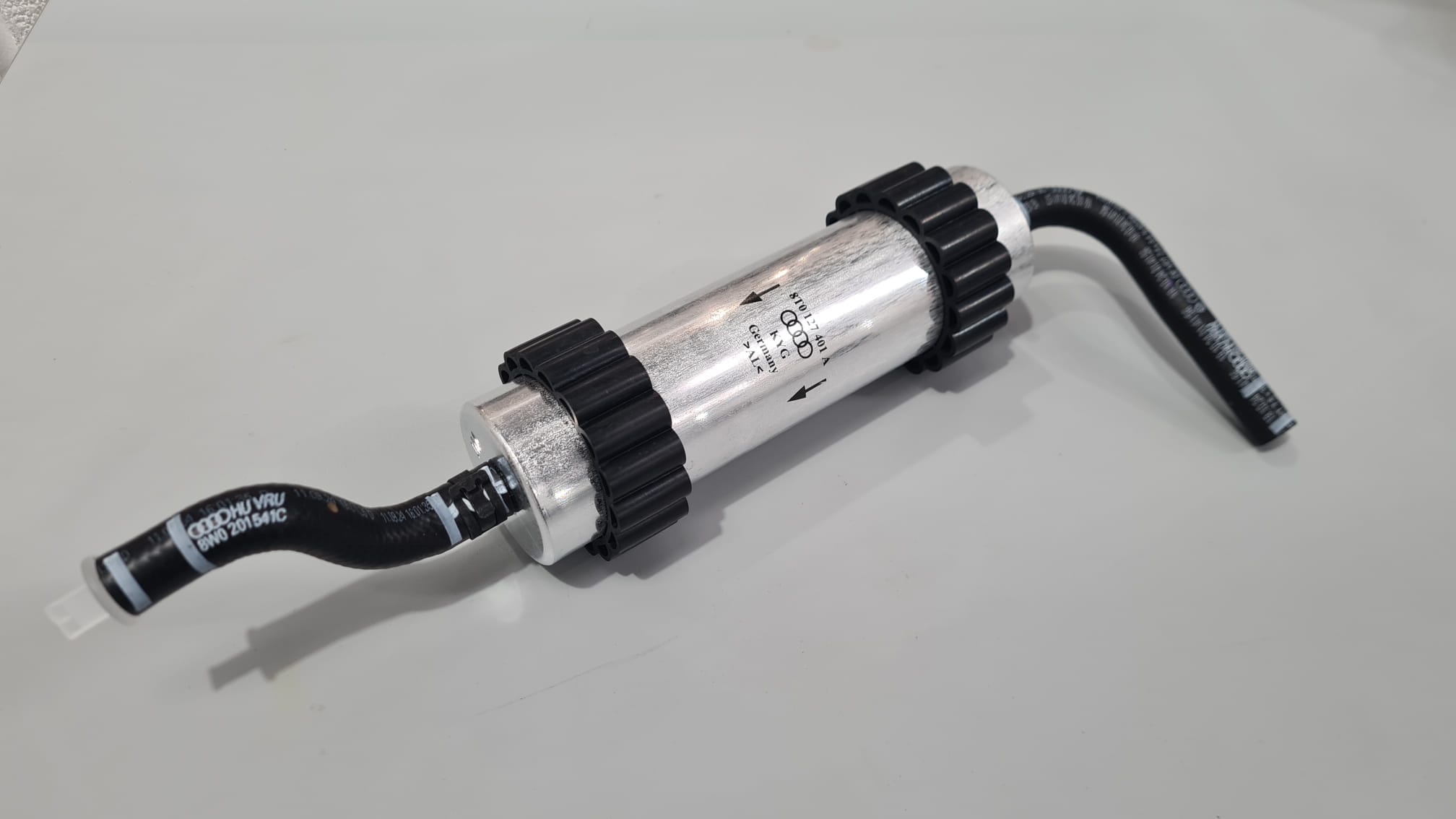
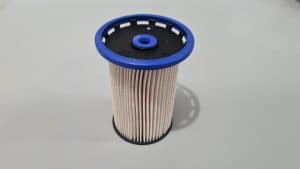
- Cartridge filters: The most common setup in today’s diesel cars. A fixed plastic or aluminium housing sits in the engine bay, holding a pleated, multi-layer filter element. This element captures particles and separates water, while the housing may also include valves, sensors, or even a hand primer. At service, only the element is replaced, keeping the housing in place.
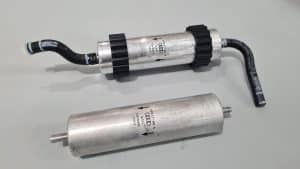
- Sealed filter units: In other designs, the entire filter (housing and media) is replaced as one piece. These are more typical in older or heavy-duty vehicles, and some versions also include built-in water separation layers or a drain bowl.
In many instances, diesel fuel systems can also include a coarse strainer inside the tank (part 2 in the diagram), which helps catch larger debris before reaching the low-pressure fuel pump or main filter.
Keeping up with servicing ensures your diesel fuel filter, whichever type your vehicle uses, continues to provide complete protection for the fuel system.
Book your servicing and diesel fuel filter replacement at Cole & Miller Automotives, Arlesey, today.
Typical diesel fuel filter problems
Several issues can occur when a diesel fuel filter isn’t working properly. Some of the most common issues are:
- Tank strainer blockage: A clogged tank strainer forces the lift pump to work harder, often creating noisy operation and uneven fuel delivery.
- Incorrect installation: Using the wrong filter or fitting seals incorrectly can result in fuel leaks, air entering the system, or unfiltered diesel bypassing the filter.
- Air leaks: Poor-fitting or worn seals can allow air into the low-pressure side of the system, causing hesitation, stalling, or long starting times.
- Water ingress: If water isn’t separated or drained, it can corrode injectors and damage the high-pressure pump.
- Restricted main filter: Build-up inside the filter limits fuel flow to the high-pressure pump, leading to poor performance, extended cranking, or even a no-start condition.
When did you last service your diesel vehicle? Booking a service now is the best way to prevent these diesel fuel filter problems from turning into expensive repairs.
Diesel fuel filter service life
The lifespan of a diesel fuel filter isn’t fixed. It depends on the manufacturer’s schedule, so it’s always worth checking your vehicle’s handbook.
However, it’s worth keeping these points in mind:
- Correct design and quality: Always use the diesel fuel filter specified for your vehicle – whether a cartridge or sealed unit. Not all filters are built to the same standard. Poor-quality parts can restrict fuel flow, cause leaks, or fail to separate water effectively, leaving the system at risk.
- Water checks: Some diesel fuel filter designs include a drain or water-in-fuel sensor. If present, these should be inspected at each service and drained as needed to stop water from building up in the system.
- Priming required: Once a new diesel fuel filter is fitted, the system must be primed using the vehicle’s pumps or a built-in hand primer. If this step is skipped, air can remain in the fuel line, leading to hard starting or even damage to the high-pressure pump.
- Efficiency decline over time: ISO testing shows that a new diesel filter can remove more than 95% of water. As its service life ends, that efficiency may drop to around 70%, giving much less protection to the fuel system.
Replacing your diesel fuel filter at the right intervals is vital for avoiding bigger problems. Don’t skip regular servicing in a bid to save money; it could result in more expensive repairs later on.
Why diesel filter replacement matters
Changing your diesel fuel filter at the correct intervals is one of the most reliable ways to protect your vehicle’s fuel system. It prevents harmful particles and water from turning into serious repair bills.
Keeping to the recommended service schedule reduces the likelihood of breakdowns and helps your engine run efficiently. Staying ahead of filter maintenance now avoids much greater problems later.
Of course, who you trust with that servicing makes all the difference. That’s why drivers turn to Cole & Miller Automotives in Arlesey.
Why drivers choose Cole & Miller Automotives, Arlesey
Our customers know their vehicles are in safe hands because we provide:
- Expert diesel servicing tailored to your vehicle.
- Courtesy cars are available to keep you on the road.
- A 12-month parts and labour guarantee.
We’re proud to be backed by a {{average-rating}}⭐ Google rating from {{review-count}} happy customers in Arlesey, giving you added confidence when you book your diesel vehicle service with us.
Keeping on top of your diesel fuel filter is one of the simplest ways to protect your engine.
Book your service with Cole & Miller Automotives, Arlesey today by calling 01462 730803.
FAQ: Diesel fuel filters
- What does a diesel fuel filter do?
A diesel fuel filter removes fine particles and traces of water before they can reach the injectors and high-pressure pump. Without an effective filter, contaminants can cause corrosion, blockages, or excessive wear – problems that often lead to poor performance or expensive failures.
- Where is the diesel fuel filter located?
The main diesel filter is generally positioned on the low-pressure side of the fuel system, between the tank and the high-pressure pump. On many modern cars, it’s installed in the engine bay, which can be accessed more easily during servicing. In addition, many vehicles also include a coarse strainer in the tank to trap larger debris before it reaches the main filter.
- What are the symptoms of a blocked diesel fuel filter?
When the diesel fuel filter becomes clogged, you may notice difficult starting, hesitation under acceleration, loss of power, stalling, or even a complete no-start condition. Because these symptoms can also point to other mechanical problems, having the vehicle checked by a professional is essential rather than relying on guesswork.
- Can a clogged diesel filter damage the pump?
Yes. A restricted diesel filter reduces fuel flow, forcing the high-pressure pump to work harder. Over time, this added strain can cause premature wear or even pump failure—a far more costly repair than routine filter replacement.
- How often should a diesel fuel filter be replaced?
There isn’t a single set mileage for replacement, as it varies by manufacturer. The safest approach is following your vehicle’s official servicing schedule and replacing your diesel fuel filter at the recommended intervals.