Braking System Guide
You might not give much thought to your car’s braking system. You press the pedal, and the vehicle slows down. Job done.
But there’s a lot happening behind that simple motion. Your brakes are made up of several carefully engineered components, working in sync to control and stop a moving vehicle, often under pressure and at speed.
Understanding how the braking system works not only makes you a more informed driver but also highlights just how crucial this system is to your safety.
In this blog, Cole & Miller Automotive in Arlesey explains how car brakes work, what each component does, and why regular servicing is important for long-term performance.
Braking System: How Car Brakes Work
Your braking system is one of the most vital safety features on your vehicle. Every time you press the pedal, your moving vehicle, often weighing more than a tonne, is brought to a safe, controlled stop. But what exactly makes that happen?
The Simple Science Behind Stopping
As your vehicle moves, it carries kinetic energy. The system uses friction to convert kinetic energy into heat, allowing the vehicle to slow down in a controlled, measured way.
While braking systems can vary between vehicle types, here’s how most everyday vehicles bring themselves to a stop:
- You press the brake pedal
- Hydraulic pressure is created and transmitted through sealed brake lines to each wheel
- Either disc brakes or drum brakes apply friction to slow the car down
- ABS (Anti-lock Braking Systems) may engage to prevent the wheels from locking under hard braking

That’s the foundation of how car brakes work — but what’s really happening beneath the surface?
What Happens When You Press the Brake Pedal
Pressing the brake pedal sets off a chain reaction that either slows down or brings your vehicle to a stop. This all happens in a fraction of a second.
Here’s how it unfolds step by step:
- You apply pressure to the brake pedal
This simple movement starts the process. - The brake servo increases your braking force
Also known as the brake booster, the servo multiplies the force from your foot. Without it, slowing the vehicle would take much more physical effort. - The master cylinder converts this force into hydraulic pressure
This pressure builds in the brake fluid — a special liquid contained within the sealed system. - Brake fluid pressure is transmitted through the sealed lines and hoses
This pressure is sent to all four wheels. Because the system is sealed, the pressure is distributed with minimal loss. - The pressure engages the brakes at each wheel
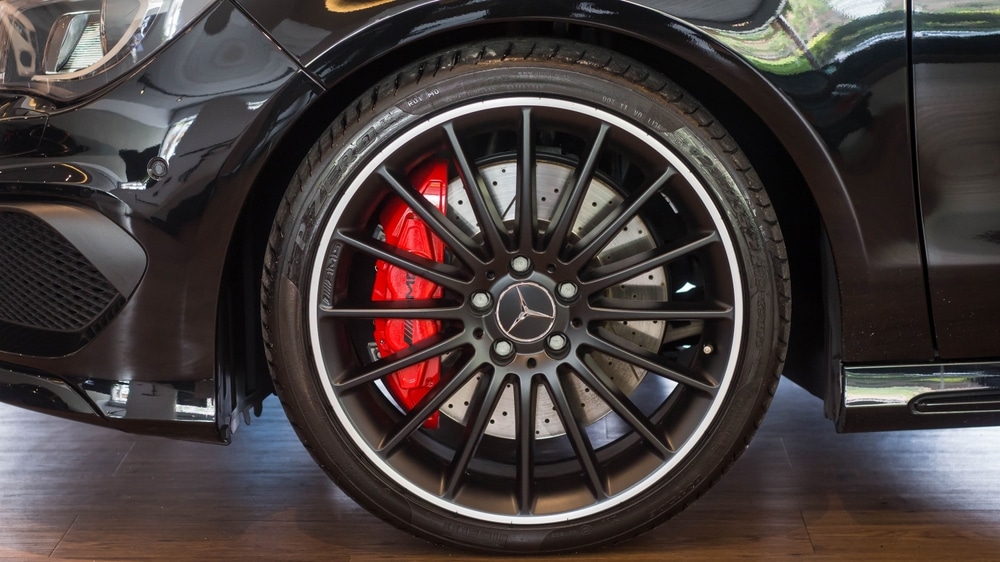
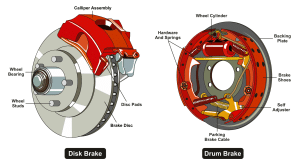
- Disc brakes (now the most common type): The hydraulic pressure pushes brake pads against a spinning brake disc, creating friction that converts motion into heat and slows the wheel down.
- Drum brakes (often found on older vehicles or on rear wheels): Pressure moves pistons inside wheel cylinders, which push brake shoes outward against the inner surface of a drum. This contact creates the friction needed to slow the vehicle.
- Releasing the pedal resets the system
Once you lift your foot, the brake pedal springs back. The system pressure drops, and the brake components release. Your car can now move freely again.
This whole process happens almost instantly, but only if every part is functioning as it should. That’s why regular servicing is so important. At Cole & Miller Automotive, if anything’s wearing out or underperforming, we’ll catch it early.
Other Key Features of the Braking System
Anti-lock Braking System (ABS)
ABS prevents the wheels from locking during sudden or hard braking. It works by rapidly adjusting the brake pressure, reducing it initially then reapplying it very quickly. This helps you stay in control, maintain steering input, and avoid skidding, particularly in emergency situations or on slippery roads.
Parking Brake System
Your parking brake, often called the handbrake, is a separate part of the braking system, designed to hold the vehicle securely when parked. It also provides a backup if the main brakes ever fail. In older systems, pulling the lever engages a cable that mechanically applies the rear brakes. Modern vehicles increasingly use electronic parking brakes, where a switch activates a small motor to do the same job. In many automatics, this happens automatically. Regardless of the type, the parking brake works independently of your hydraulic brakes and, by law, must operate on at least two wheels. It remains a critical safety feature.
Don’t Put Off Brake Maintenance
When it comes to your braking system, staying proactive is key. A change in how the pedal feels or any warning light on your dashboard should be checked as soon as possible.
At Cole & Miller Automotive in Arlesey, we take brake safety seriously. Our team carries out detailed diagnostic procedures and visual inspections during your regular service to keep your braking system operating reliably. If we spot early signs of wear, we’ll advise you before it becomes a more serious issue.
We have a {{average-rating}} star Google rating from {{review-count}} satisfied customers across Bedford, Hitchin, Letchworth, Stevenage.
Why choose Cole & Miller Automotive?
- Clear, transparent pricing. No unexpected surprises
- 12-month parts and labour guarantee on all work
- Dealer-level information and equipment backed by technical expertise
- Genuine or OEM-quality parts fitted as standard
- Free courtesy car to keep you mobile while we work
Understanding how car brakes work is important. But keeping them in safe working order — that’s where we come in.
Call Cole & Miller Automotive in Arlesey on 01462 730803 today.