BMW Charging Fault
“Your electrical machine electronics (EME) unit has failed. The only option is replacement, and once you include parts and labour, the total cost will be just over £9,500.”
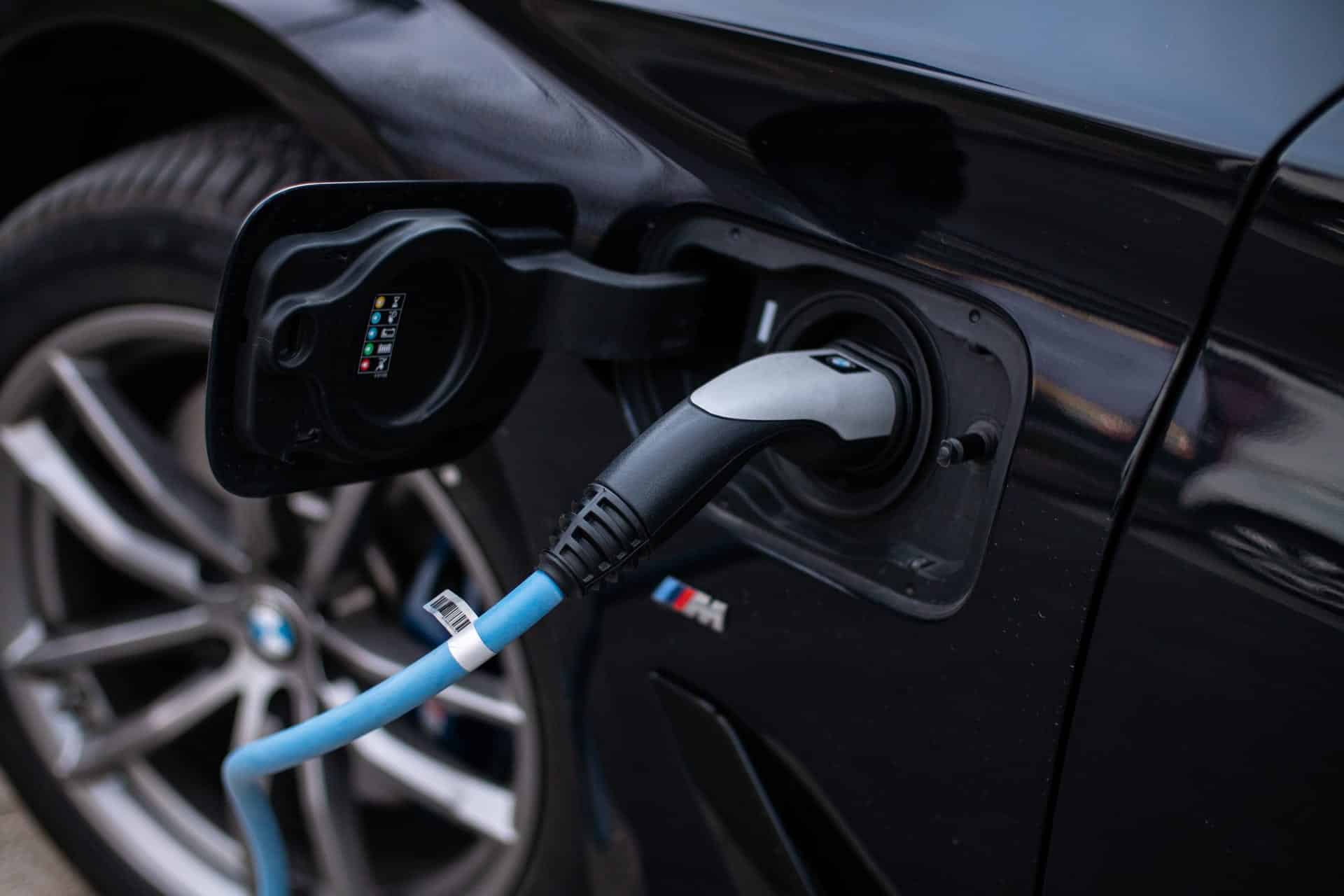
That was the crushing verdict given to Mrs C when she turned to her BMW dealer for help with her 2020 BMW 5 Series 530e Plug-In Hybrid. For any driver, being confronted with that kind of figure is enough to make the stomach drop.
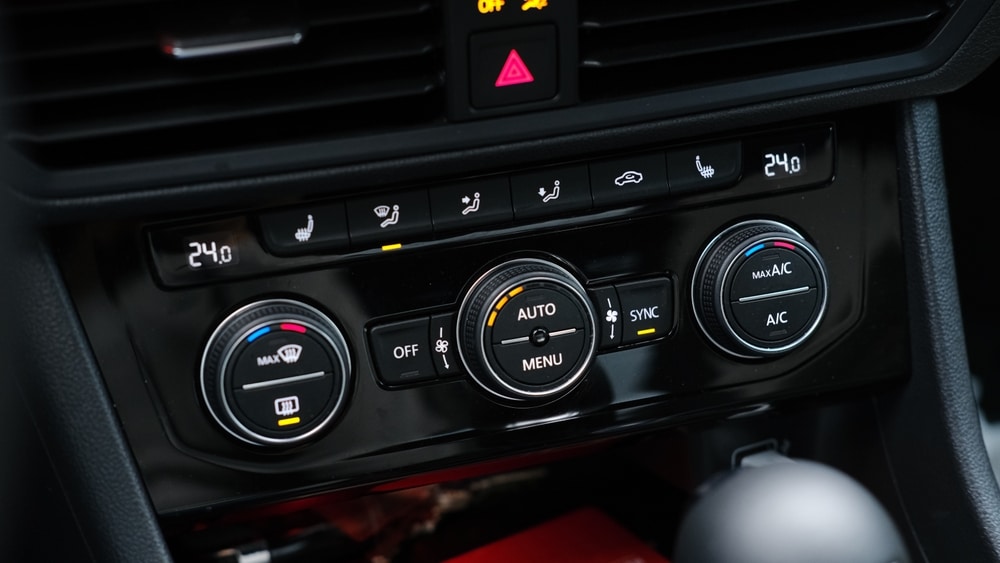
Her BMW was already showing serious problems. The heater and air conditioning no longer worked, and the charging system had stopped charging the high-voltage battery. Piece by piece, her car was going downhill, fast.
Unwilling to accept the dealer’s unaffordable recommendation, Mrs C turned to Cole & Miller Automotive in Arlesey. For our technicians, this wasn’t the end of the story — it was the beginning of an in-depth challenge we were fully prepared to take on.
Read on to discover how our BMW experts carried out a component-level EME repair that brought Mrs C’s BMW back to life… without the crippling expense of a full replacement.
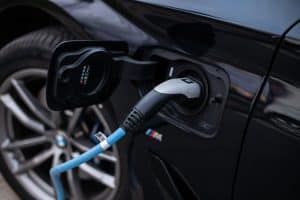
Tracing the Source of the BMW Charging Fault in Arlesey
The first stage was a thorough conversation with Mrs C, who explained when the issues began, what symptoms had appeared first, and what actions had already been taken. This background provided us with essential information, giving us a complete view of the car’s problems.
We then linked up our dealer-level diagnostic equipment and retrieved the fault codes. Among those stored were:
- 21E720 – Charging electronics fault: This indicated that there was a lack of connection between the charger and its controller, preventing the BMW from charging.
- 80120E – Electric A/C compressor undervoltage/overvoltage: Voltage instability caused the compressor to shut down.
- 8011C4 – A/C compressor voltage sensor fault: The internal A/C sensor was providing inaccurate readings about the high-voltage supply.
- 030ECD / 030EC1 – Charging management errors: The charging system could not run the process safely.
Each fault code gave us part of the picture, but none could stand alone as a full explanation. By comparing them together, the pattern became clearer. These codes together pointed to a consistent pattern: the charging system, PTC heater, and air conditioning were all affected.
Each of these depended on the electrical machine electronics (EME) unit — the very part the dealership had already proposed replacing. For us, this wasn’t the final answer, but an important sign that the problem stemmed from a single high-voltage feed.
This made it clear that further investigation was the essential next step.
Deeper Checks Into the BMW Heater Fault and High-Voltage Systems
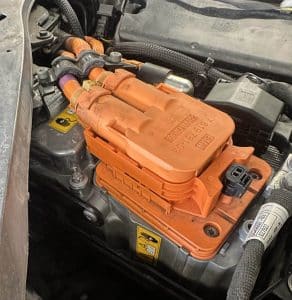
Using Wiring Diagrams
Because the codes were clustered around high-voltage circuits, our next step was to study BMW’s genuine wiring diagrams. These diagrams lay out the vehicle’s electrical system, showing exactly where current should be supplied and how components are linked together.
Checking the Evidence
Analysis of the serial data revealed that the A/C compressor wasn’t receiving any voltage supply. This meant the compressor itself wasn’t defective; the problem was that no voltage was leaving the EME unit to feed the system. The wiring diagrams confirmed that the charging system, PTC heater, and A/C all depended on this same feed, guarded by a fuse inside the EME unit.
Applying Our Own Test Plans
We then moved on to our in-house high-voltage test plans, developed for complex EVs and hybrids. Because working on high-voltage systems carries risk, this stage required certified technicians with specialist training. The plans allowed us to test each component under controlled conditions and confirm whether it’s performing as it should or not.
Digging Into the EME Unit
While the dealership suggested replacing the full EME unit, we stripped it down and tested its parts individually. Inside, we found that the high-voltage fuse was blown. A fuse doesn’t typically blow without a reason; it usually indicates that excess current has been drawn by another part of the circuit, forcing the fuse to blow to break the circuit, protecting the system.
Isolating the Culprit
We tested each part of the shared circuit in turn: the wiring harnesses, A/C compressor, onboard charger, and finally the PTC heater. The PTC heater readings were the ones that were off — resistance was reading far too low, confirming it was drawing excessive current and had caused the blown fuse. We then wanted to verify our findings so used careful calculations to back up this conclusion.
The result was clear: the fault wasn’t with the whole EME unit but a failed fuse caused by the PTC heater.
Carrying Out the Repairs That Brought the BMW Back to Life
Once the testing gave us clarity, the repair work could begin:
- Sourcing the fuse: The required fuse isn’t sold separately by BMW, but we located one through our trusted supplier network. After dismantling the EME unit, we installed the replacement fuse to the correct specification and reassembled the unit.
- Replacing the heater: The defective PTC heater was removed and replaced with a premium-quality part, returning the high-voltage circuit to safe operation.
- Final system checks: With the new parts in place, the circuit was tested thoroughly using an insulation resistance tester and a multimeter. Results showed the high-voltage supply had been reinstated, the car’s systems were safe, and the battery was charging properly again.
Mrs C’s BMW Restored to Full Working Order
With the repair finished, the difference was dramatic. Heating returned, the climate control worked as intended, and the high-voltage charging system was back in operation. What had been a BMW close to being undriveable was now functioning perfectly.
For Mrs C, the result brought real peace of mind. Where she had once been faced with the prospect of losing the use of her car, she now had her 5 Series running exactly as it should. The key was persistence, careful testing, and the ability to apply specialist skills to extremely complex problems.
By drawing on our BMW expertise, qualifications to work on high-voltage systems, genuine wiring diagrams, and carefully designed test plans, we pinpointed the fault and resolved at component level, without the need for unnecessary replacements.
The result was a BMW fully restored and a customer who not only saved a substantial sum but also gained renewed trust in the value of choosing an independent specialist over the main dealer.
Why Cole & Miller Is the Smart Choice for BMW Repairs
When our technicians were presented with this challenging BMW fault, they applied every element of their skillset. Comprehensive diagnostics that explored every avenue, determination to uncover the exact cause, and the ability to repair at component level all combined to achieve the right result for Mrs C.
It’s this thorough approach that makes Cole & Miller Automotive in Arlesey stand out. We don’t resort to costly part-swapping — we trace the real issue and provide a repair that’s right for both you and your BMW.
Here’s what you can expect when you choose us:
- Cost-effective repairs without dealership mark-ups
- Dealer-level diagnostic equipment and technical expertise
- Honest, straightforward communication
- High-quality repairs for all makes and models
- …All supported by a 12-month parts and labour guarantee
We’re proud of the results we achieve. We have a {{average-rating}} star Google rating from {{review-count}} satisfied customers.
Call Cole & Miller Automotive today on 01462 730803 — because your BMW deserves more. And that’s what we deliver.